Rock Run Industries: Building Growth Through Innovation, Partnership, Productivity, and Press Brakes
Many businesses start small and stay that way. But Rock Run Industries LLC has evolved from a small garage into a 480,000-square-foot manufacturing enterprise supporting some of the nation’s largest manufacturers. Over the past two decades, this family-owned company has steadily expanded its capabilities, customer base, and geographic reach.
Today, the Millersburg, Indiana–based company is recognized for delivering complex, high-quality metal components at scale, while preserving the responsiveness, flexibility, and personal service of a much smaller organization.
A Full-Service Manufacturing Partner
While Rock Run Industries serves a range of Original Equipment Manufacturer (OEM) customers, its largest concentration is in the recreational vehicle and outdoor leisure sectors. The company also supplies steel products for fabrication and construction applications, supporting projects that demand durability, precision, and consistent quality.
Its comprehensive range of fabrication and secondary operations includes:
Sheet laser cutting
Tube laser cutting and bending
Precision sheet metal forming
Robotic/manual welding
Automated powder coating
Engineering support
Turnkey assembly
Housing these capabilities at every site minimizes handoffs, reduces lead times, and strengthens quality control. Additionally, this integrated approach allows Rock Run to take on complex, multistep projects that many competitors must outsource.
Engineering support is another key differentiator, with Rock Run working closely with customers early in the design process to improve manufacturability, reduce material waste, and optimize cost structures. This collaboration helps OEMs accelerate product launches while avoiding costly redesigns.
Leadership and a Culture of Investment
Since opening its doors in 2007, Rock Run has maintained a consistent focus on long-term investment, building sustainable capacity, retaining skilled employees, and leveraging leading manufacturing technologies.
As Vice President of Sales and Business Development, John Schlabach helps guide strategic planning, modernization initiatives, and operational improvements. His focus on aligning technology, workforce capabilities, and customer needs has helped shape a culture in which training and workforce development remain priorities.
“By investing in the right equipment and developing our people, we’ve been able to attract and retain strong talent,” Schlabach says, “while giving both new and experienced operators the confidence to work with advanced technology and serve our customers better year after year.”
Deep Roots in the RV Industry
Rock Run is a staple within the recreational vehicle sector, where up to 85 percent of its work is concentrated. The RV industry presents unique challenges, as products must withstand vibration, weather exposure, and long-term wear while meeting strict weight and cost targets. At the same time, manufacturers face intense competition and frequent model updates.
“We understand what RV manufacturers are up against,” Schlabach says. “They’re balancing durability, aesthetics, cost, and speed to market. Our job is to help them hit all of those targets.”
Today, Rock Run is a trusted partner to the three largest RV manufacturers in North America. By working closely with customers on design and production planning, the company helps OEMs develop innovative solutions that enhance performance and differentiate their offerings.
Responding to Market Shifts
Like nearly all manufacturers, Rock Run experienced major disruption during the COVID-19 pandemic. RV demand declined sharply as travel slowed, leading to reduced production volumes across the industry. As restrictions eased, however, interest in domestic travel surged, and the market rebounded rapidly.
“We went from a standstill to a sprint,” Schlabach recalls. “When people started traveling again, the industry bounced back strong. We had to be ready.”
Meeting this renewed demand required expanded capacity, faster throughput, and greater operational flexibility. To support this next phase of growth, Rock Run turned to a familiar partner.
The Cincinnati Equipment Advantage
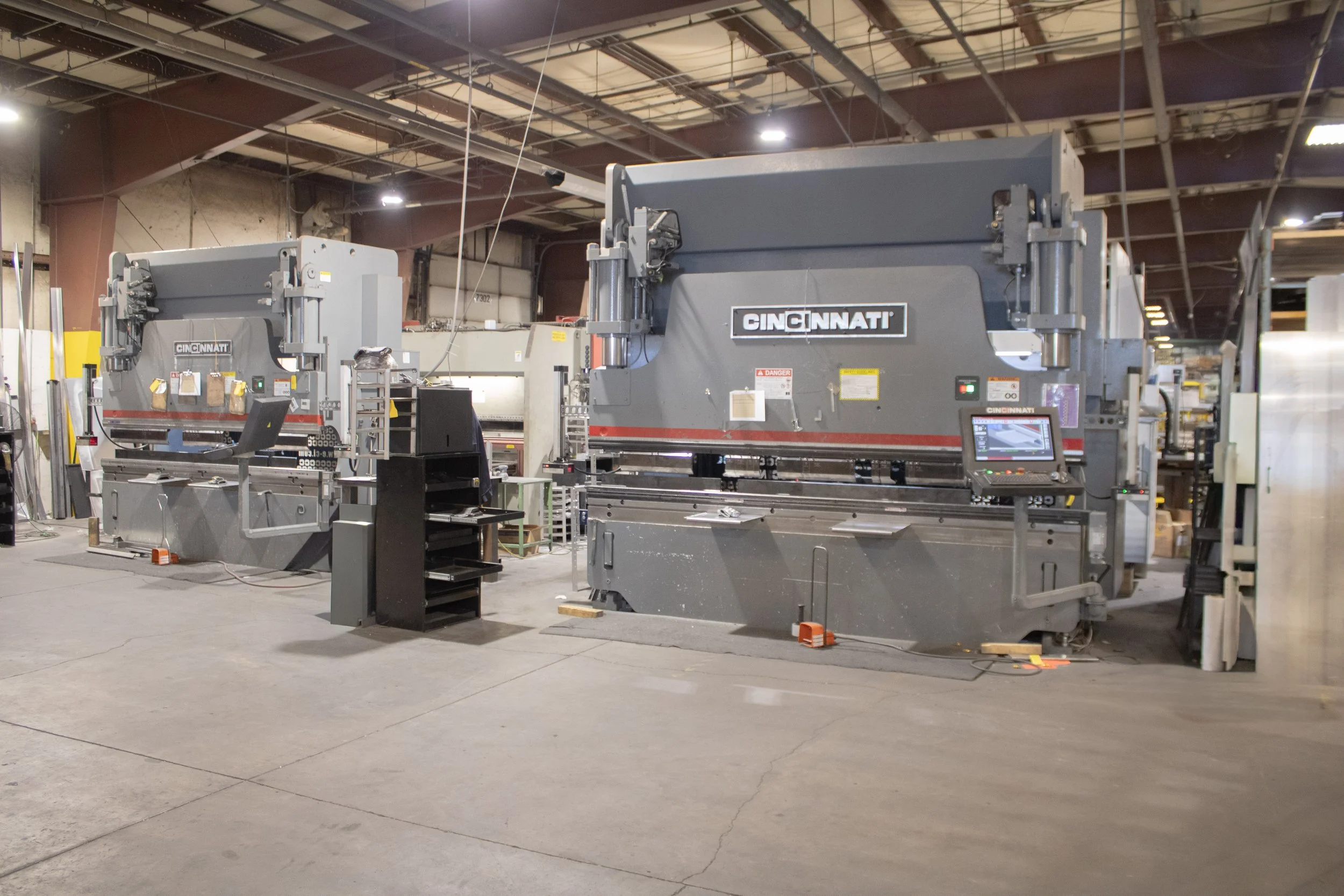
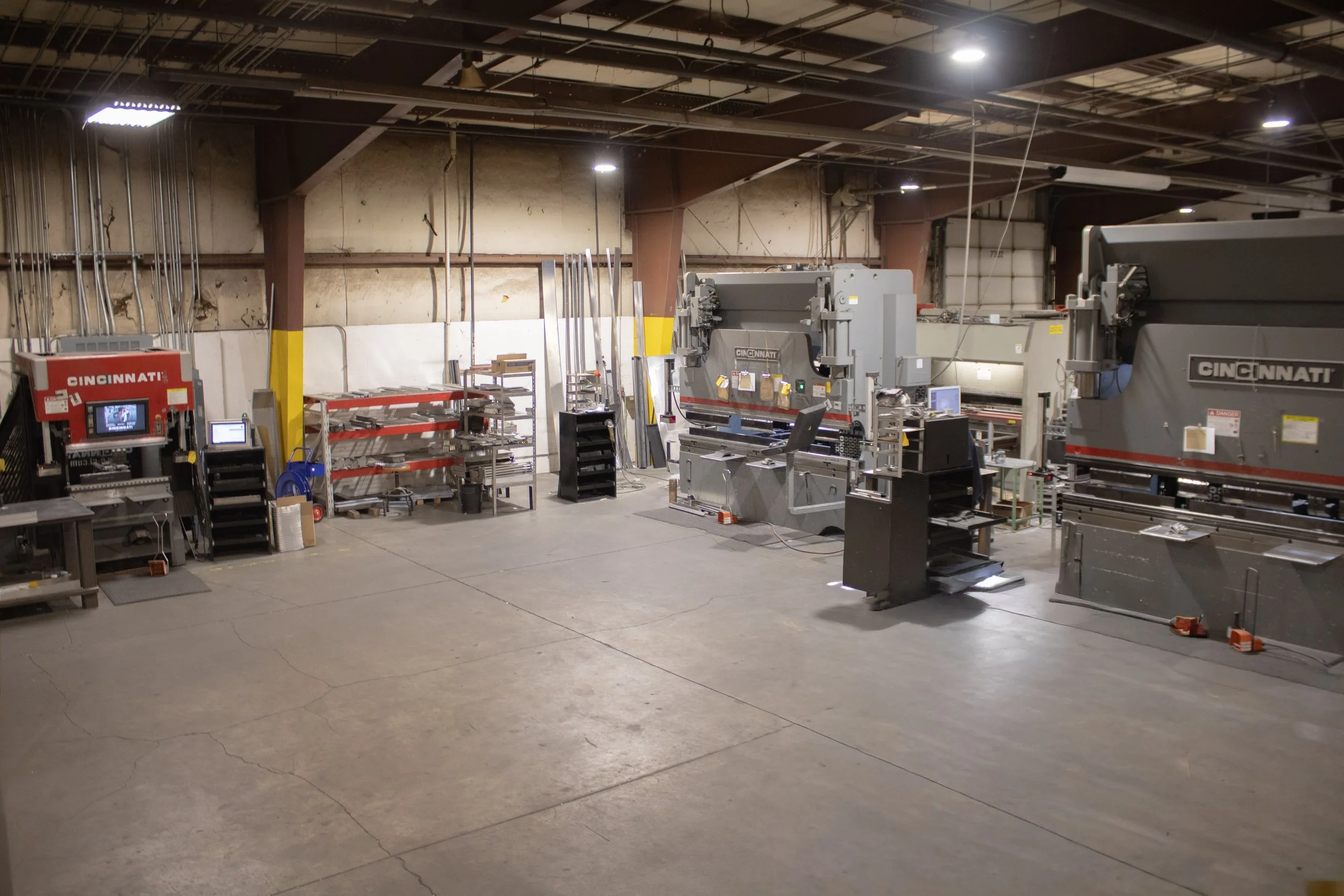
Built for high productivity and long-term reliability, Cincinnati press brakes have been a core part of Rock Run’s operation since 2020. As part of a broader modernization effort, the company expanded its press brake capacity with machines ranging from 40 to 230 tons across multiple CI platforms. Today, that fleet includes 10 CI press brakes.
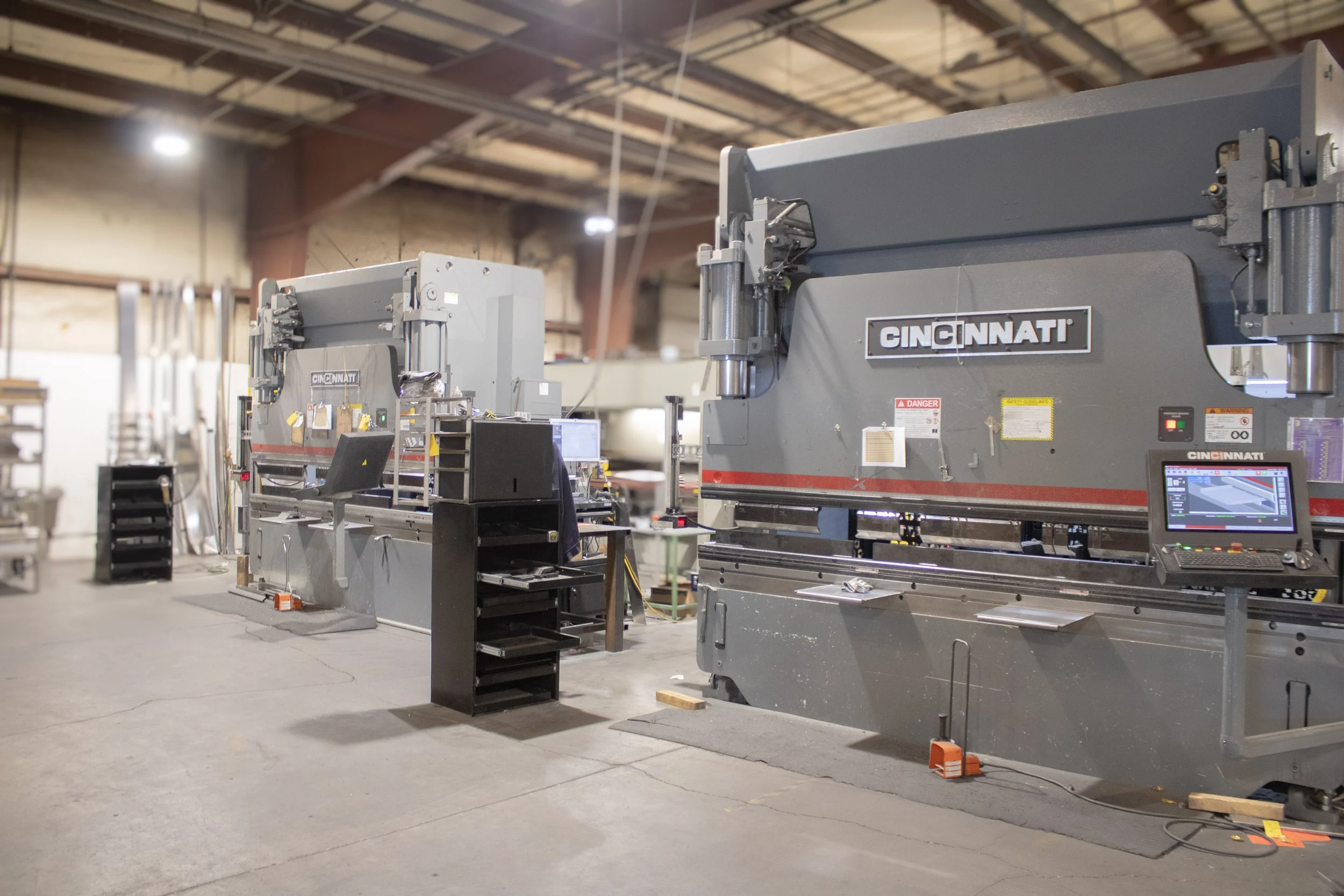
The lineup, from electric press brakes such as the Goform, with fast cycle times to high-tonnage hydraulic press brake systems capable of forming half-inch plate and thicker, provides flexibility without sacrificing throughput. Efficient press brakes, such as the electric and hybrid bending machines, minimize idle time and boost parts-per-hour performance, while advanced six-axis backgages and multi-segment press brake tooling reduce setup and repositioning time.
CI’s Large Tonnage Autoform and XFORM Press Brake systems combine high tonnage bending with extended stroke and throat depths, enabling wider and deeper parts to be formed in fewer operations. Easy-to-use, high-resolution touchscreen controls and on-the-fly programming further streamline changeovers.
“These capabilities significantly shorten lead times, reduce cycle times, and increase overall output measurably,” Schlabach says. “And that’s exactly what we were looking for.”
Giving Operators The Press Brake They Want
When evaluating new bending equipment, Rock Run places strong emphasis on operator feedback. Many of its press brake operators had extensive experience with Cincinnati CNC press brakes and preferred their interface and workflow.
“The number one reason we chose Cincinnati was because our operators asked for it,” Schlabach explains. “Once they got used to the interface, that’s what they wanted. We value their input.”
This operator-driven approach reduces resistance to change, shortens learning curves, and improves equipment utilization. Training also benefits from standardization.
“Training is much easier for us,” he adds. “The controls are intuitive, and our team already understands how the machines work.”
Maintaining a largely uniform fleet also simplifies maintenance, parts management, and technical support.
Productivity, Precision, and Quality in Bending
The impact of Cincinnati press brakes has been felt across multiple performance metrics.
“From what we’ve found, the CI machines produce parts faster,” Schlabach says. “Put two operators side by side for an hour, and the Cincinnati machine will outperform the other.”
And gains extend well beyond speed.
“We’ve increased production dramatically,” he said. “We’re getting good parts the first time instead of the third or fourth, which reduces scrap.”
Improved first-pass yield translates directly into lower material costs, reduced rework, and more predictable delivery schedules, and these are key advantages in high-volume metal manufacturing.
Technology at the Point of Production
Another major advantage is allowing parts to be programmed directly at the press brake machines.
“We like our operators programming their own work,” Schlabach says. “With the CI machines, we can drop in a DXF file with bend lines, which speeds up programming and cuts down on bad parts.”
This approach reduces reliance on offline programming and enables operators to respond quickly to engineering changes or custom sheet-metal bending orders.
“With some other machines, you have to program offline, which slows things down,” he explains. “That’s another reason why CI is such a good fit for us.”
The result is greater agility in an industry defined by frequent design updates and short product cycles.
Positioning for the Future
What began as a small garage operation has grown into a nationally recognized manufacturing partner. By combining advanced technology with skilled people and a customer-first mindset, Rock Run is well-positioned to support the next generation of OEM innovation and long-term customer success.
As RV and other industrial markets rebound and move beyond pre-pandemic levels, the company expects strong, ongoing demand for high-quality, cost-effective parts.
To stay ahead, Rock Run continues to invest in press brakes, press brake automation, and digital workflows with an eye toward productivity and customer value.
For Schlabach, it all comes down to one simple sentence. “The best way I know to put it,” he said, “is that we produce more parts with Cincinnati machines. And that’s ultimately what matters.”