
The “Zero-Fear” Robot: How to Automate High-Mix Bending Without Hiring a Programmer
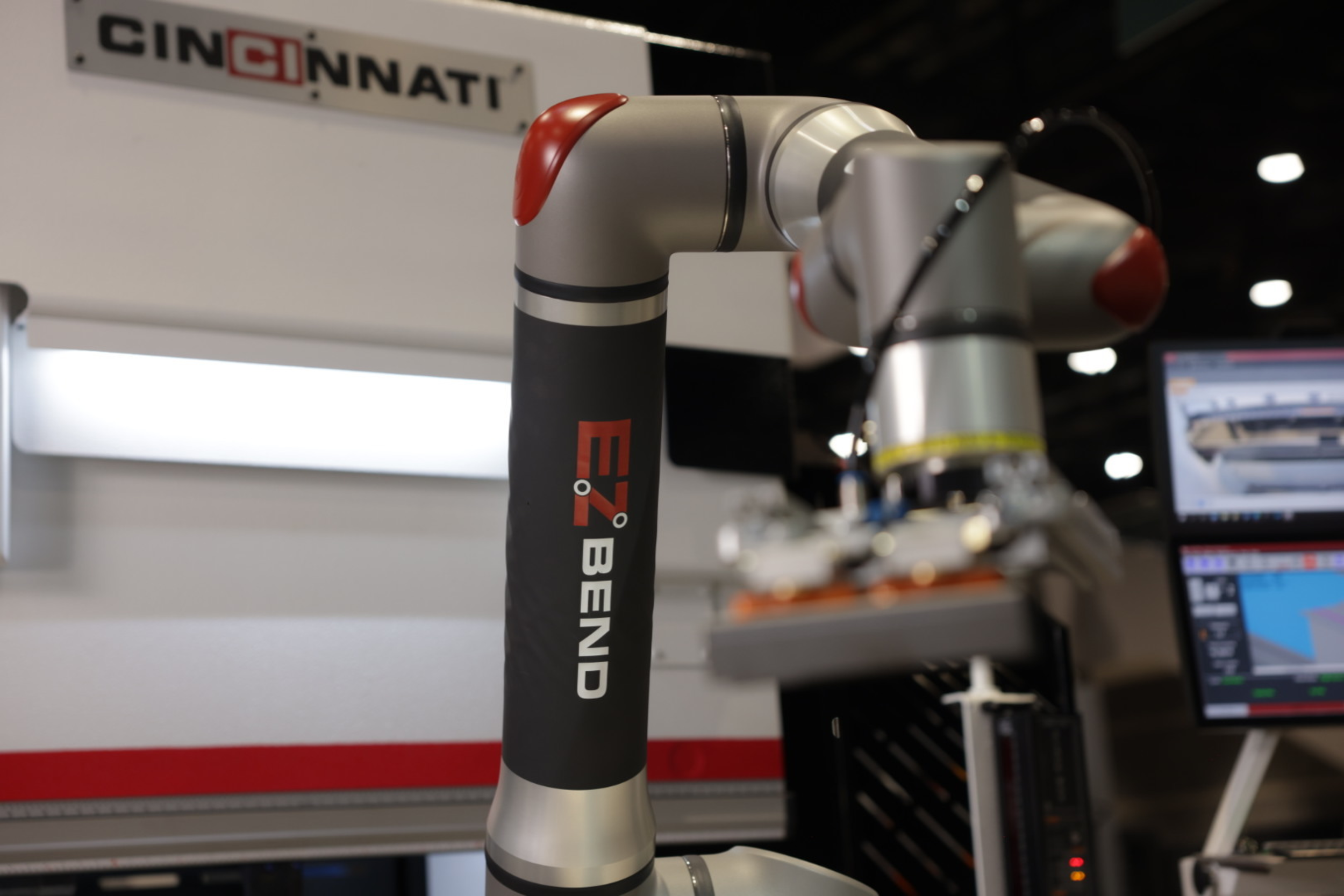
For a lot of fabricators, the words press brake automation sparks the same reaction: intrigue mixed with anxiety. You’ve seen the videos—sleek, fenced-in robotic cells from brands like Amada or Trumpf, bending the same part over and over with flawless precision. Impressive? Absolutely. Practical for a high-mix job shop? That’s where the fear creeps in.
The assumption is almost universal: robotic bending is expensive, complex, and only works if you have a dedicated programmer on staff. That’s exactly the mindset Cincinnati Incorporated’s EZ Bend was designed to eliminate.
Automation Anxiety Is Real—and Understandable
Most buyers aren’t afraid of automation tools. They’re afraid of what comes with them: weeks of integration, a maze of software options, and needing to hire or train a specialist to keep the robot running.
When you’re running high-mix, low-volume work, that kind of complexity doesn’t just slow you down—it kills ROI. If a robot only makes sense when you’re bending the same part 10,000 times, it’s not solving the problem most job shops actually have.
What “High-Mix / Low-Volume” Press Brake Automation Really Means
High-mix automation isn’t about lights-out production of a single SKU. It’s about flexibility. You don’t need a robotic cell that’s perfected one part, you need a bending solution that can switch jobs in minutes, work flawlessly with the operator already running the brake, and adapt with you as your work changes — That’s the gap that the CI EZ Bend cobotic cell fills.
Zero Coding, Zero Fear: Inside the EZ Bend Cobotic Cell Interface
Here’s where EZ Bend flips the script… Instead of requiring offline programming or robot-specific code, EZ Bend is designed around the machine operator. The interface is visual, guided, and intuitive—built so someone with zero programming experience can be productive almost immediately.
With press brake automation such as the EZ Bend, an operator can efficiently load the part system, follow step-by-step prompts, and teach positions through simple movements. No G-code, no robot language, no calling an engineer every time a new job hits the floor. If your operator can run a press brake, they can run EZ Bend.
An Assistant in Productivity, Not a Replacement
One of the biggest misconceptions about automation is that it’s meant to replace skilled labor. The EZ Bend takes the opposite approach. Think of it as a personal assistant to your press brake operators, helping them do the following: hold and position parts consistently, reduce fatigue and repetitive strain, and free them to focus on quality and flow. Also, because EZ Bend is mobile, it doesn’t demand a permanent space.
You’re not sacrificing valuable floor space or locking yourself into a single layout. Compare that to traditional robotic cells that become immovable fixtures that disrupt your workflow the moment it changes.
Why Simpler Automation in Manufacturing Wins in the Real World
High-end robotic bending cells absolutely have their place. But they often require dedicated programmers, extensive safety fencing, and long setup and changeover times. In other words, they require a babysitter.
EZ Bend doesn’t. It works with your current team, your current parts, and your current reality. No fear. No over-engineering. Just practical automation that actually fits high-mix bending.
The Bottom Line: Press Brake Automation Doesn't Have to Be Scary
Press brake automation doesn’t have to be intimidating to be effective. The EZ Bend proves that robotic bending can be approachable, flexible, and operator-friendly—without sacrificing performance or speed.
If you’ve been holding back because automation feels too complex, too rigid, or too risky, this is your sign: high-mix automation doesn’t have to be scary anymore.
