Hydraulic Power Clamping
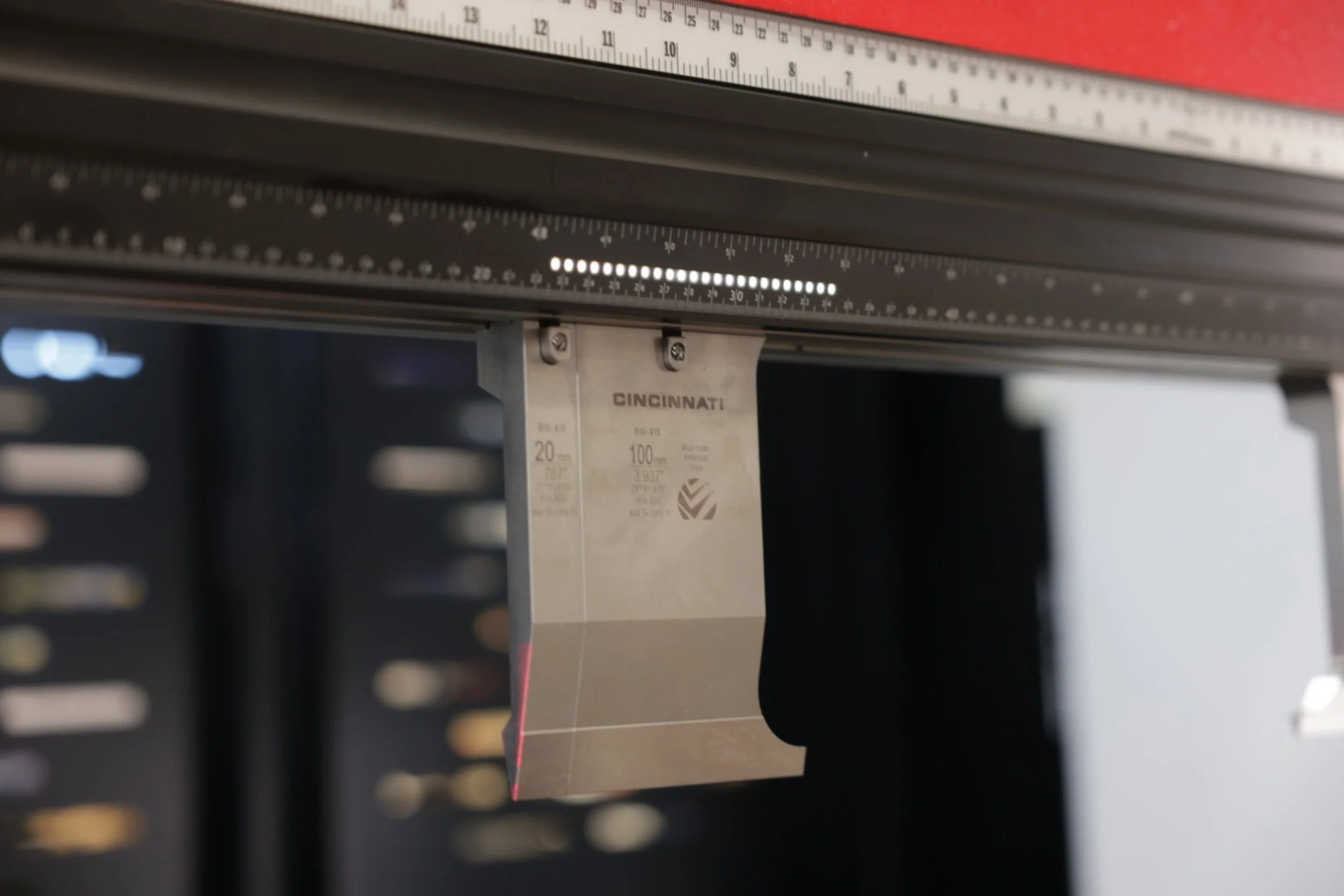
Hydraulic power clamping upgrades deliver faster setup times, improved safety, and greater precision by automatically seating, aligning, and uniformly securing tooling. They simplify tool changes, enable easier use of segmented tooling, reduce operator fatigue, extend tool life, and integrate seamlessly with CNC controls and automation—helping your shop increase productivity while maintaining consistent, high-quality results.
Benefits
Dramatic Reduction in Setup Time (Increased Productivity)
Hydraulic clamping systems can tighten tools in 3 to 4 seconds. Instead of tightening separate clamp plates or set screws every few inches, an operator can lock the entire length of the tool instantly, reducing tool changeover time to minutes instead of hours.
Automatic Tool Seating and Alignment
Modern hydraulic systems automatically seat and align punches (and dies) during the clamping process. This eliminates the need for a secondary manual, "air-bend" seating process, ensuring tools are perfectly aligned with the center line.
Improved Safety and Ergonomics
By removing the need for manual, tool-intensive tightening (e.g., using wrenches), hydraulic clamping drastically improves operator ergonomics and safety. This decreases the risk of hand injuries and reduces operator fatigue, allowing for more focus on production.
Consistent Clamping Force and Precision
Unlike manual tightening, which can vary based on operator strength, hydraulic systems provide uniform pressure along the entire tool length. This consistency ensures higher bending accuracy and better repeatability, which is critical for tight-tolerance parts.
Facilitates Use of Segmented/Small Tools
Hydraulic clamping enables the efficient use of shorter, segmented, precision tools that can be easily handled by a single operator. This makes changing complex setups a one-person job rather than a team effort often involving lifting heavy tooling.
Improved Compatibility with Automation
Hydraulic systems integrate seamlessly with CNC controls. This is essential for modern shops looking to adopt robotic loading or automated workflow, as the clamp can communicate its state to the machine controller, preventing machine startup when unclamped.
Improved Tool Life and Protection
The secure, uniform clamping provided by hydraulics prevents tool vibration and misalignment, reducing wear and tear on expensive precision tooling.